
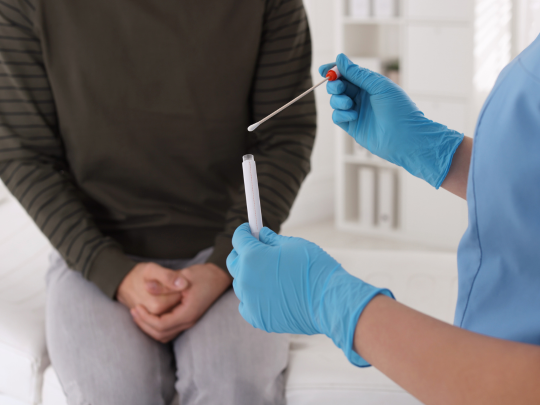
A cervical screening test is a quick check that looks for the human papillomavirus (HPV), the infection behind almost all cervical cancers. It is recommended every 5 years for women and people with a cervix aged 25 to 74 who have ever been sexually active, and it is done before any symptoms appear. You can have your doctor collect the sample or collect it yourself. This guide explains what the test looks for, what happens at the appointment, what each result means and how to book cervical screening at Harpley Doctors in Werribee.
Key Takeaways
- The test looks for HPV and replaced the Pap test in 2017.
- Screening is every 5 years from age 25 to 74, including if you have had the HPV vaccine.
- You can collect your own vaginal sample or have your doctor collect a sample from your cervix.
- Most results show no HPV, and the next test is due in 5 years.
- Unusual bleeding, discharge or pain during sex needs a doctor’s visit, not a screening test.
What the test looks for
The National Cervical Screening Program explains that the cervical screening test checks for HPV, a common infection spread during sexual activity. Most HPV infections clear up on their own, but some can cause changes in the cells of the cervix that may eventually lead to cancer. Finding HPV early means it can be monitored or investigated.
The current test replaced the Pap test in 2017. The Pap test looked for cell changes; the current test looks for the virus that causes them. It does not check for ovarian or uterine cancer.
The HPV vaccine protects against up to 9 types of HPV, including those that cause around 70 per cent of cervical cancers. Because it does not cover every type, people who have been vaccinated still need regular screening.
Who should have a cervical screening test, and how often
You are eligible for a Medicare-subsidised test if you are aged 25 to 74, have ever been sexually active and are a woman or person with a cervix. Your first test is due when you turn 25, then every 5 years after a normal result.
According to the program’s eligibility guidance, it makes no difference whether you:
- are gay, lesbian, bisexual, transgender or straight
- have had the HPV vaccine or not
- are no longer sexually active, or have had only one partner
- have been through menopause
- have had a baby, or are pregnant
Screening during pregnancy is safe, so if you are due while you are pregnant, tell your doctor and it can be part of your antenatal care. Screening also continues through and after menopause, which our GPs can talk through alongside other menopause support.
If you have had a full or partial hysterectomy, check with your doctor about whether you still need screening. If you are under 25, routine screening is not needed, because common infections and changes usually clear by themselves before then. If you are 75 or over, you can still ask for a test.
What happens at the appointment
The test is done in a private room and usually takes just a few minutes, and you can bring a family member or friend with you. You can choose between two ways of giving the sample, and the program states that both are equally accurate and safe ways to find HPV.
Your doctor collects the sample
You undress from the waist down, lie on your back with your knees apart and are given a sheet to cover yourself. The doctor gently inserts a speculum into the vagina and takes a small sample from the cervix with a swab. It may feel uncomfortable but should not hurt; if it does, say so straight away.
You collect the sample yourself
With self-collection, your doctor explains how to take the sample, and you then insert a swab into your vagina and rotate it for 10 to 30 seconds, in private or with help if you prefer. Harpley Doctors offers this option, and our article on self-collection covers who it suits in more detail. Healthdirect notes that self-collection is not advised if you have unusual vaginal bleeding, pain or unusual discharge.
Due or overdue for screening? Book with one of our GPs in Werribee and choose the collection method that suits you.
Understanding your results
The sample is sent to a laboratory, and results usually come back to your doctor within a few weeks. They are also recorded on the National Cancer Screening Register, which sends you a letter or SMS when your next test is due. The program’s results guide sets out what each result means:
- No HPV found: this is the result for most people. Your next test is due in 5 years.
- Unsatisfactory: the lab could not read the sample. You need a repeat test in 6 to 12 weeks, and it does not mean anything is wrong.
- HPV found, not types 16 or 18: if your doctor collected the sample, you repeat the test in 12 months, as your immune system has a good chance of clearing the virus in that time. If you collected the sample yourself, your doctor asks you to come back so a sample can be taken from the cervix for further testing.
- HPV types 16 or 18, or abnormal cells: your doctor refers you to a specialist, usually a gynaecologist, for a colposcopy, a closer look at the cervix that feels similar to the screening test.
A referral does not mean you have cancer. An HPV infection usually does not turn into cervical cancer, and it can take 10 to 15 years for an infection to cause cell changes that might eventually lead to it, which is why follow-up matters. If you have not heard about your result within a few weeks, contact your doctor or the register on 1800 627 701.
Symptoms need a doctor, not a screening test
Screening is for people without symptoms. At any age, and whenever your last test was, see a doctor if you have abnormal vaginal bleeding, unusual or persistent discharge, or pain during sex. These symptoms need a proper assessment, which may include a sexual health check, rather than waiting for your next screening date.
Cervical screening at Harpley Doctors
Cervical screening is part of the women’s health services at Harpley Doctors, and Dr Arezoo Mirzaei lists it among her areas of interest; you can read about her and our other GPs on our team page. When you book, the program suggests you mention whether you would prefer a female healthcare provider, need extra support because of a disability, or need an interpreter. We can arrange interpreter support if you let reception know.
All consultations are bulk billed. The program notes that most pathology providers bulk bill the test itself, and that Medicare covers a routine screen every 4 years and 9 months, so a test before then may attract a fee.
You can book online through HealthEngine or call (03) 8731 1330. We are open Monday to Friday 8 am to 8 pm, weekends 9 am to 5 pm and public holidays 10 am to 3 pm. New patients can complete the new patient registration form before the visit and should bring photo ID and a Medicare card.
Frequently Asked Questions
Does a cervical screening test hurt?
It may feel uncomfortable but should not hurt, whether your doctor takes the sample or you collect it yourself. If you feel pain during a doctor-collected test, tell your doctor straight away.
I have had the HPV vaccine. Do I still need screening?
Yes. The vaccine protects against the HPV types that cause around 70 per cent of cervical cancers, but not all of them, so vaccinated people still screen every 5 years from age 25.
How long do results take?
Usually a few weeks. Results go to the doctor who arranged the test and to the National Cancer Screening Register. If you have not heard after a few weeks, contact the clinic or the register on 1800 627 701.
Is self-collection as reliable as a doctor-collected sample?
The National Cervical Screening Program states that both options are equally accurate and safe ways to find HPV. The difference comes if HPV other than types 16 or 18 is found: after self-collection, you return so a sample can be taken from the cervix.
Can I have the test while pregnant?
Yes. If you are due or overdue, screening during pregnancy is safe. Let your doctor know you are pregnant before the test.
Not sure when your next screen is due? Ask one of our GPs at Harpley Doctors in Werribee, and book online through HealthEngine or by phone.