
Many sexually transmitted infections cause no symptoms, so it is possible to have one without knowing. That is why so many people ask: how often should you get an STI test? The answer depends on your age, your partners and your situation, and Australian health authorities give some clear starting points. This guide explains those recommendations, when to test sooner, what testing involves and how to arrange a sexual health check at Harpley Doctors in Werribee.
Key Takeaways
- Many STIs, including chlamydia, often cause no symptoms.
- Sexually active people under 30 are advised to have an STI check once a year.
- Get tested when you have a new partner and after unprotected sex.
- Your doctor may recommend more frequent testing depending on your situation.
- Condoms reduce the chance of STIs; an IUD or implant does not protect against them.
Why regular STI testing matters
According to healthdirect’s chlamydia page, most people with chlamydia do not have symptoms, so you may not know if you or your partner has it. Left untreated, it can cause serious complications such as infertility and chronic pain, yet once diagnosed it is easy to treat with antibiotics.
Syphilis is similar. Healthdirect’s syphilis page explains that some people have no symptoms, that it is easy to cure if found early, and that untreated syphilis can lead to serious complications in the brain, eyes and heart. Regular testing is how these infections get picked up before they cause harm.
How often should you get an STI test?
There is no single schedule that suits everyone, but the general guidance is straightforward:
- Under 30 and sexually active: get checked for chlamydia and other STIs once a year.
- Men who have sex with men: chlamydia screening every 12 months is recommended.
- Anyone sexually active: have regular sexual health check-ups and ask your doctor how often you should be tested.
- New partner: get checked before starting a new sexual relationship.
- After unprotected sex: see your doctor or a sexual health clinic for a check.
Depending on your situation, your doctor may recommend screening more often. Healthdirect also lists groups at higher risk of syphilis in Australia, including men who have sex with men, adolescents and young adults, people who may become pregnant, and Aboriginal and/or Torres Strait Islander peoples. So the honest answer is at least once a year for many people, and more often if your doctor advises it.
Pregnancy has its own schedule. If you are pregnant, you will be tested for syphilis at your first antenatal visit, again at 28 to 32 weeks and at 36 weeks, because it can pass to the baby. This is part of routine antenatal care.
When to test sooner
Do not wait for your next routine check if:
- you are concerned you might have an STI, even if you have no symptoms
- you have had sexual contact with someone who has an STI
- you have had unprotected sex
It is a good idea to avoid sex until you get medical advice. If you think you may have been exposed to HIV, act quickly: healthdirect’s safe sex guide explains that post-exposure prophylaxis (PEP) must be started within 72 hours and is available from most hospital emergency departments and sexual health clinics.
Due for a check, or worried about a recent contact? Book a confidential appointment with one of our GPs.
What an STI test involves
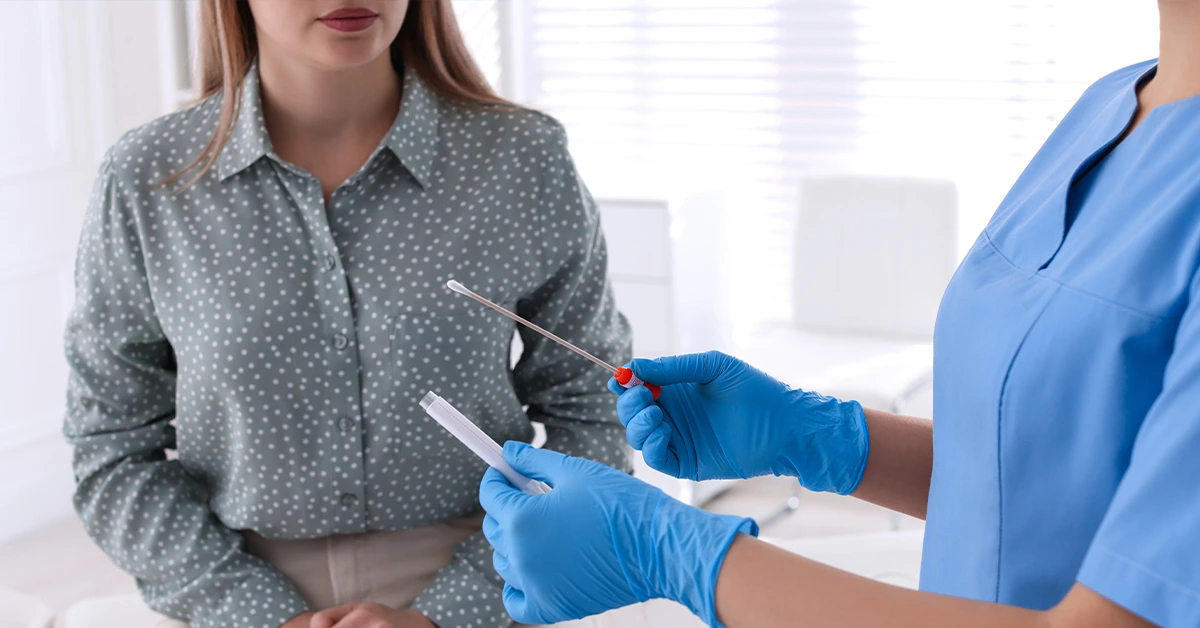
Your GP will ask a few questions about your symptoms and sexual history to decide which tests you need. Healthdirect notes that everything you share with your doctor is confidential. Chlamydia is usually tested with a urine sample or a swab, and syphilis with a blood test that looks for antibodies. Because antibodies take time to develop, a recent syphilis infection can give a negative result, and your doctor may suggest another blood test 2 weeks later.
Urine and blood samples can be collected at the on-site pathology centre run by Australian Clinical Labs, open Monday to Friday 8 am to 12 pm and Saturday 9 am to 1 pm. A cervical screening test is a separate test, recommended every 5 years for people aged 25 to 74 by the National Cervical Screening Program.
Protecting yourself between tests
Using a condom or dental dam, talking openly with partners about STIs, and avoiding sex if a partner has visible symptoms all lower your risk. Remember that contraception such as an IUD or the implant prevents pregnancy but does not protect against STIs, as healthdirect’s IUD guide and contraceptive implant guide point out, so condoms still matter. Our GPs can help you choose birth control and sexual health protection that work together.
Getting tested at Harpley Doctors
Sexual health and STD screening is one of our listed services, and you can read more on our STD check-up page. It is part of both our men’s health and women’s health care. Dr Khalida Batool lists STI management among her areas of interest; you can read about her and the other GPs on our team page. Patient records are kept confidential under the Australian Privacy Principles, as set out on our about us page.
All consultations are bulk billed. Phone consultations are not suitable for conditions that need an examination, so book a face-to-face visit if you have symptoms. If you are still unsure how often you should get an STI test, your GP can set a schedule that fits your situation. Book online through HealthEngine or call the clinic.
Frequently Asked Questions
Can I have an STI without any symptoms?
Yes. Most people with chlamydia have no symptoms, and some people with syphilis have none either. That is why regular testing matters even when you feel well.
My partner has an STI. What should I do?
See your doctor or a sexual health clinic, even if you have no symptoms, and avoid sex until you have had medical advice.
Is cervical screening the same as an STI test?
No. Cervical screening is a separate test done every 5 years for people aged 25 to 74. If you also want an STI check, ask your doctor for one.
Can I get syphilis again after treatment?
Yes. Healthdirect notes that if you have had syphilis and recovered, you can still get it again, so keep up regular sexual health checks.
A confidential check gives you peace of mind. Book online through HealthEngine or call Harpley Doctors in Werribee.